
Grace
Jacob installed decorative pendant lights in my new house. He also added new sockets behind my tv. He was friendly and professional.
Smoke ventilation, control panels, fans, lighting, and bespoke installs across Yorkshire
Grace
Jacob installed decorative pendant lights in my new house. He also added new sockets behind my tv. He was friendly and professional.
Marcus P.
Full LED upgrade across our office and warehouse in Leeds. The team handled the design, the install, and the emergency-lighting certification without us having to chase anything. Energy bill is noticeably down already.
Dan H.
Wrightsons replaced our consumer unit at home in Halifax last month. Tidy install, walked me through what changed, and the certification pack landed by email the same evening. Easy to deal with throughout.
Lara K.
We had an axial fan packing up on one of our extraction lines in Bradford. Jacob's team diagnosed it the same morning and had a replacement motor in and tested by the afternoon. Minimal downtime, fair price.
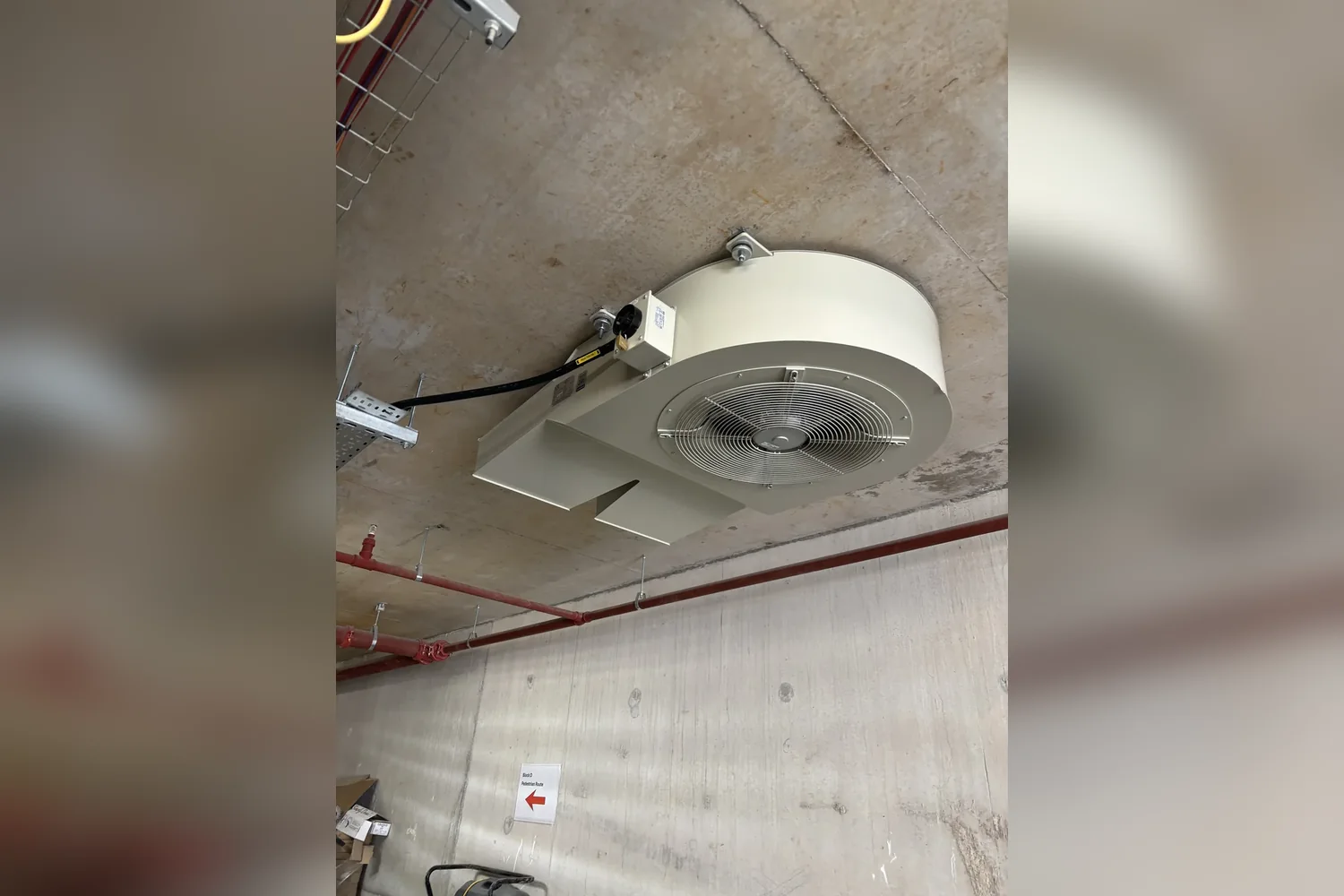
Life-safety smoke ventilation systems installed across commercial and industrial buildings. Design, install, test, commission.
Learn more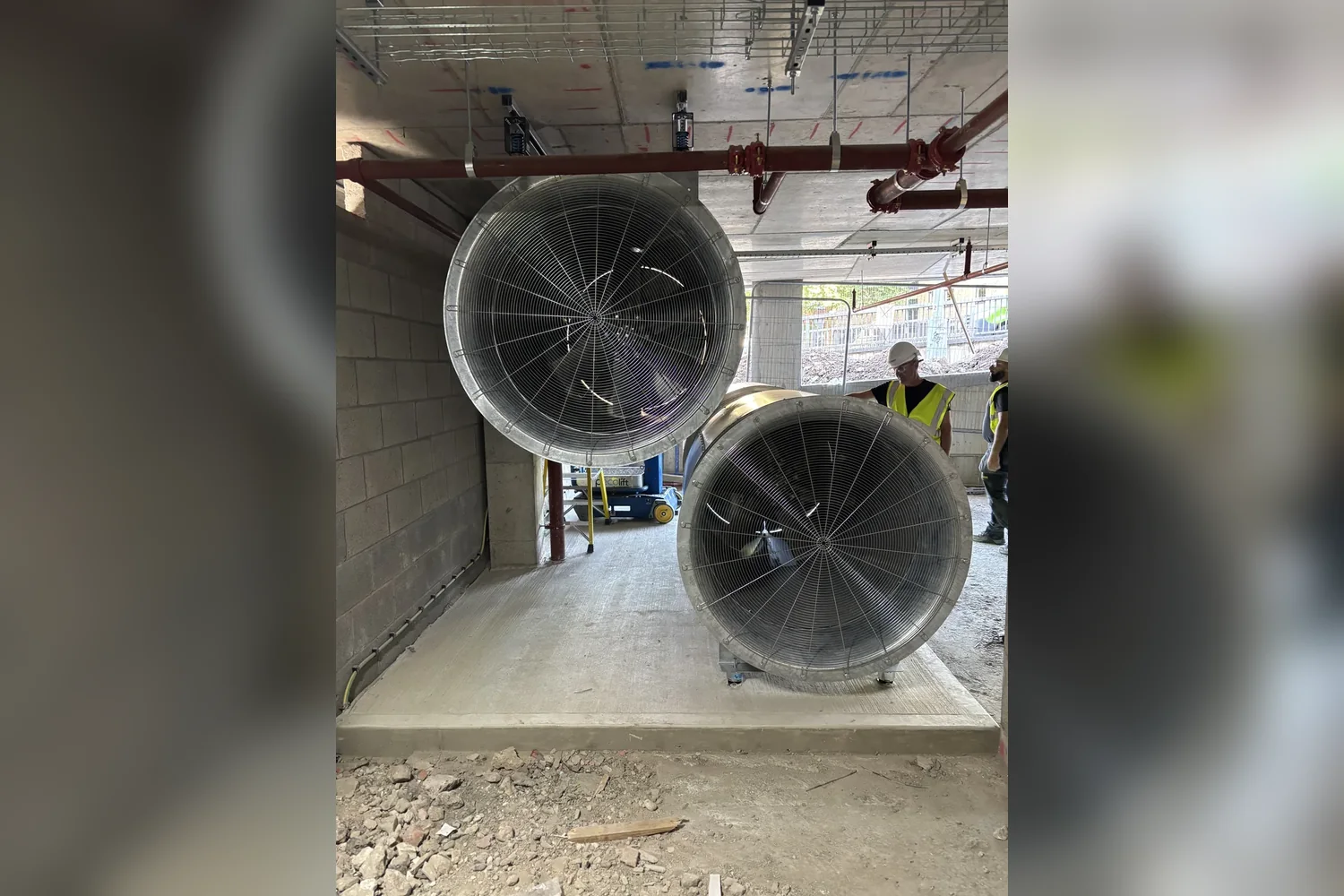
Industrial axial fan installations, replacements, and repairs across commercial and manufacturing settings.
Learn more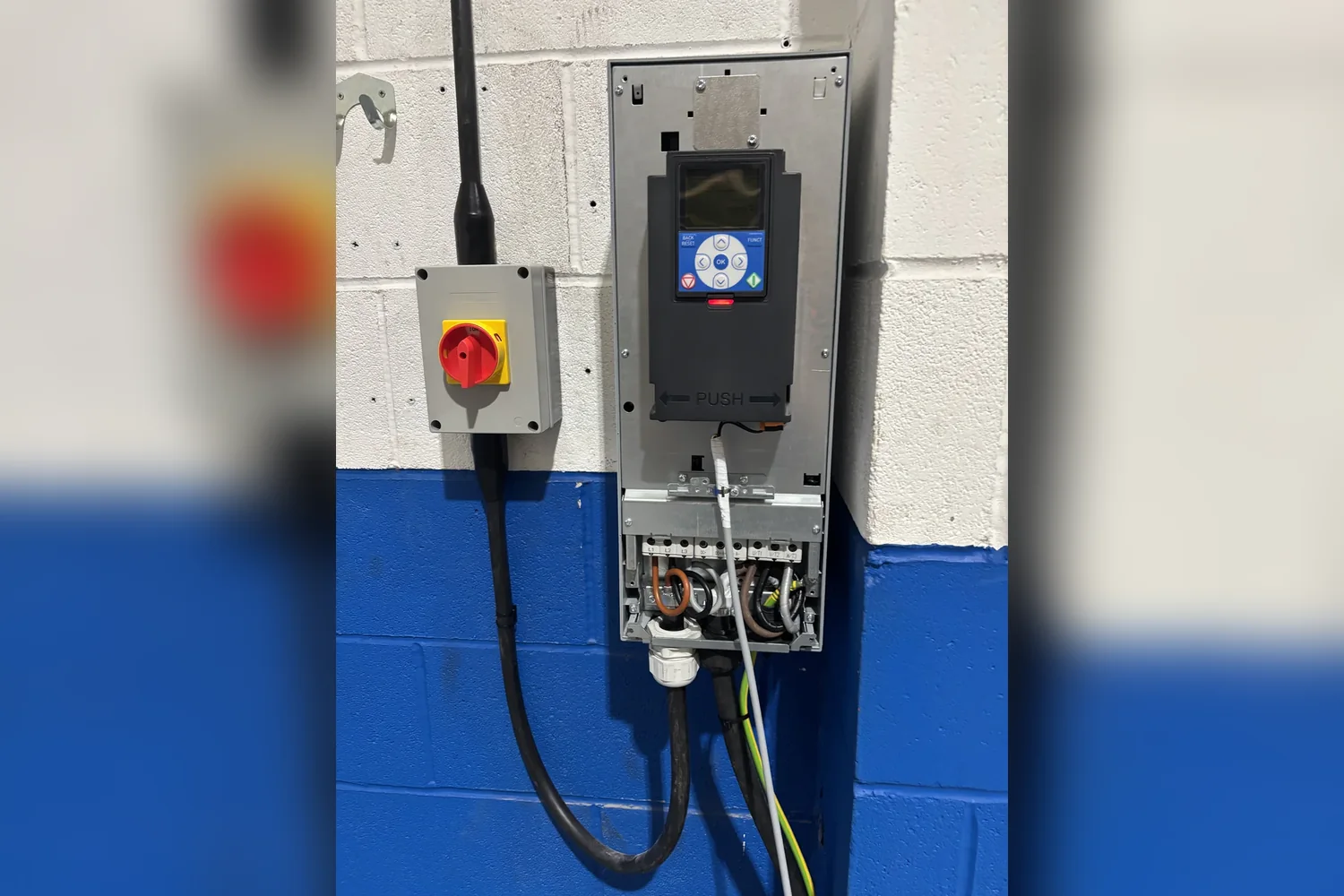
Variable frequency drive (VFD) installations and integration for motors, fans, pumps, and HVAC plant.
Learn more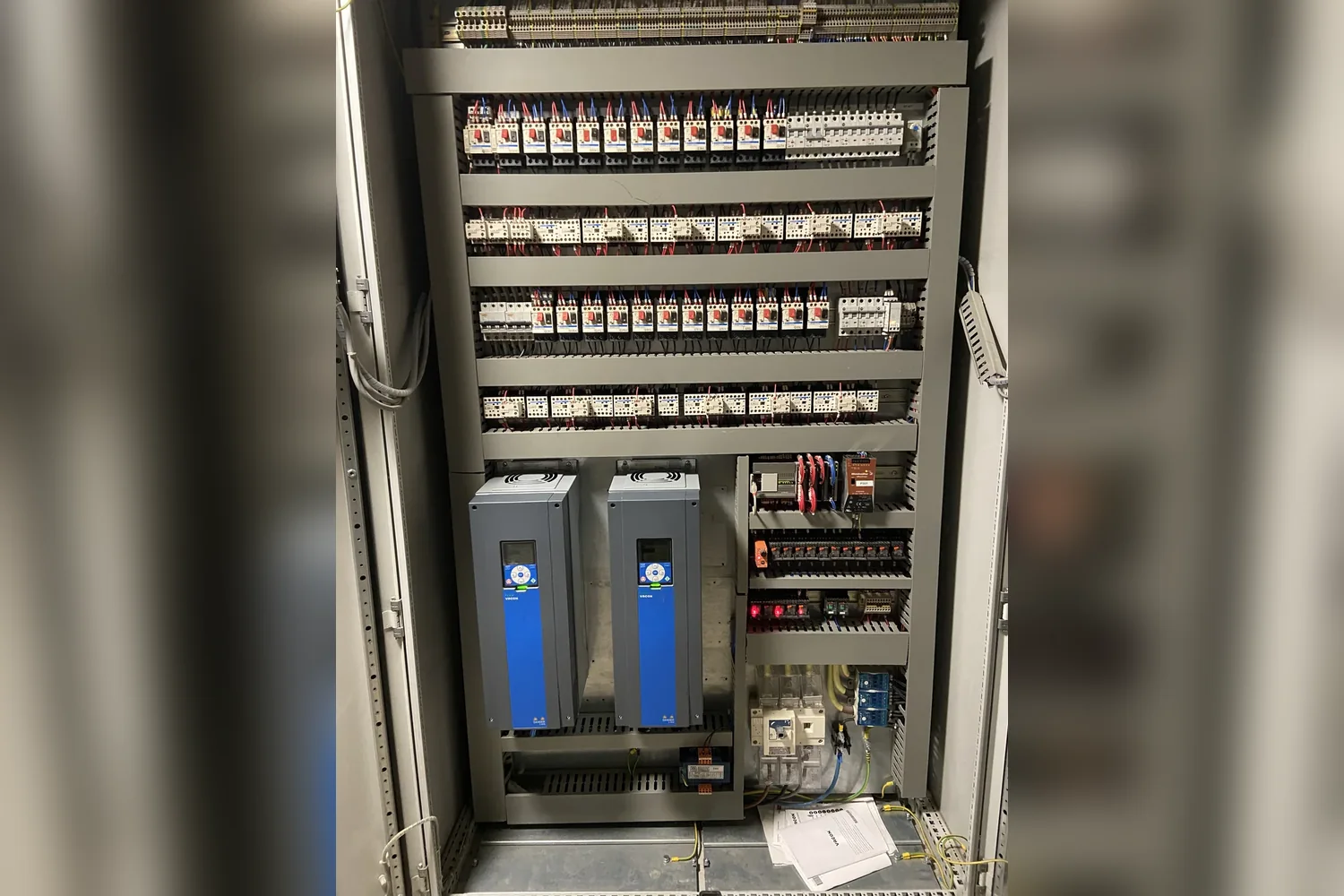
Upgrades, retrofits, and re-engineering of existing electrical control panels for new operational requirements.
Learn more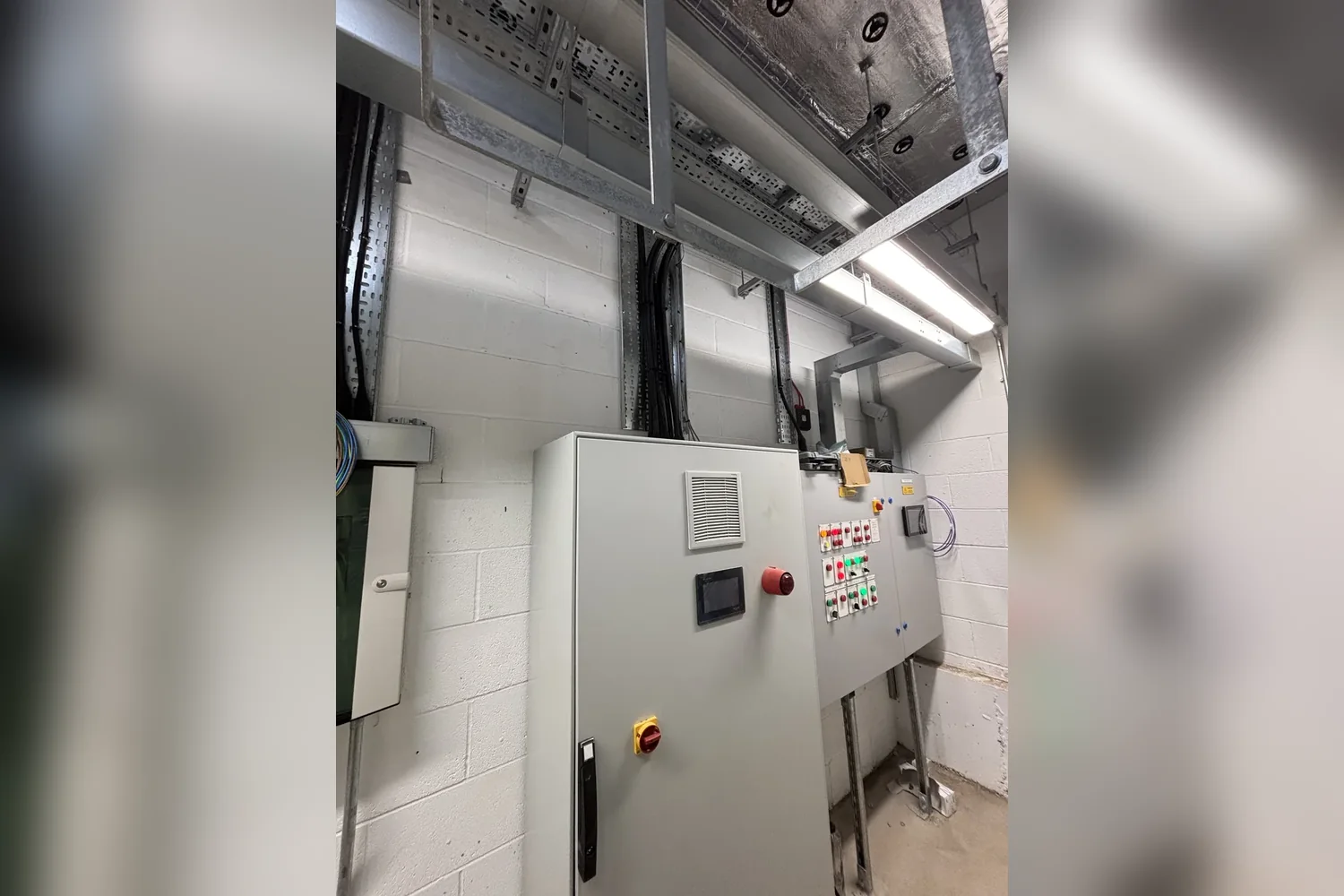
Bespoke control panel design, manufacture, and on-site installation for commercial and industrial plant.
Learn more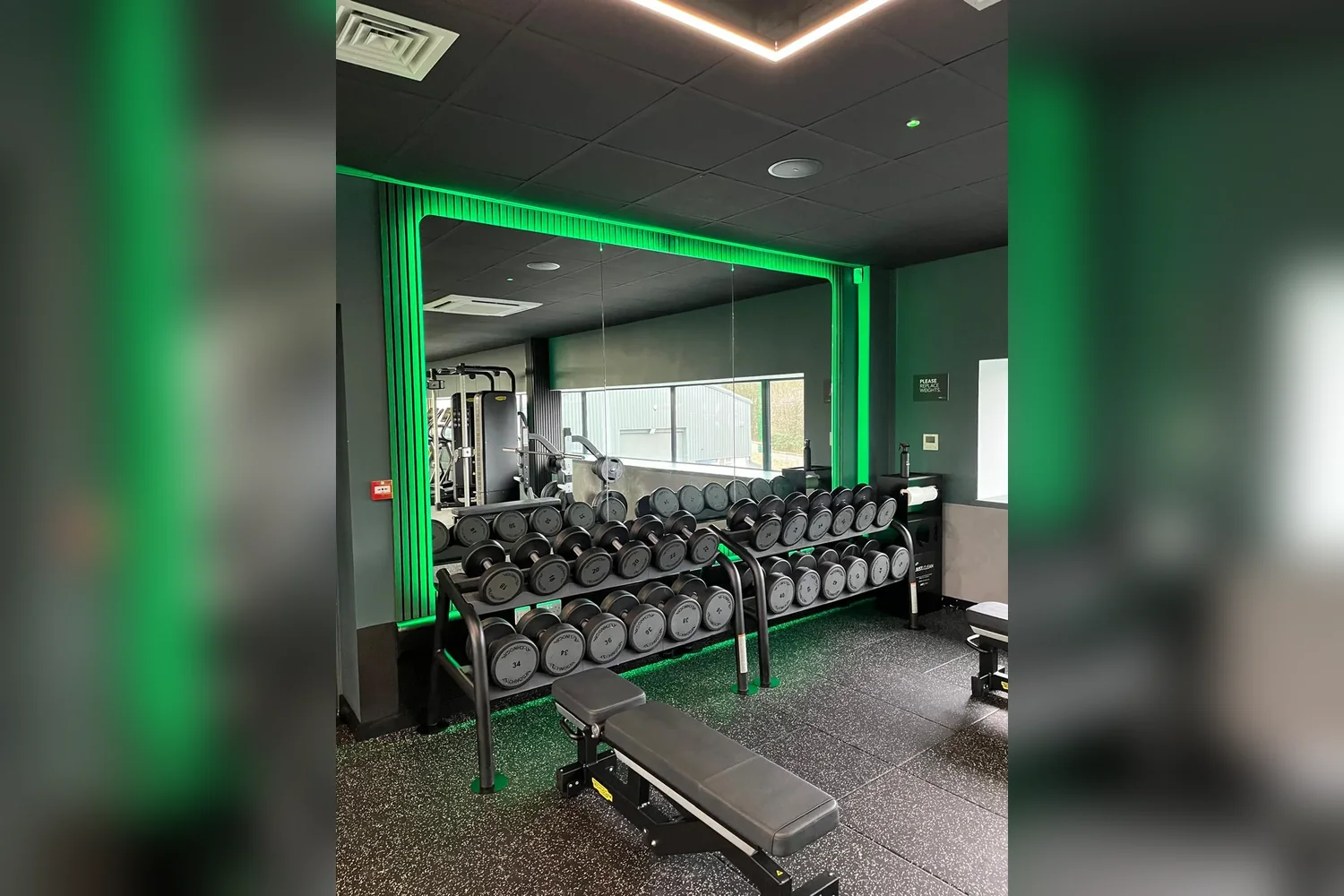
Commercial and industrial lighting design, LED upgrades, and full installations across the North.
Learn more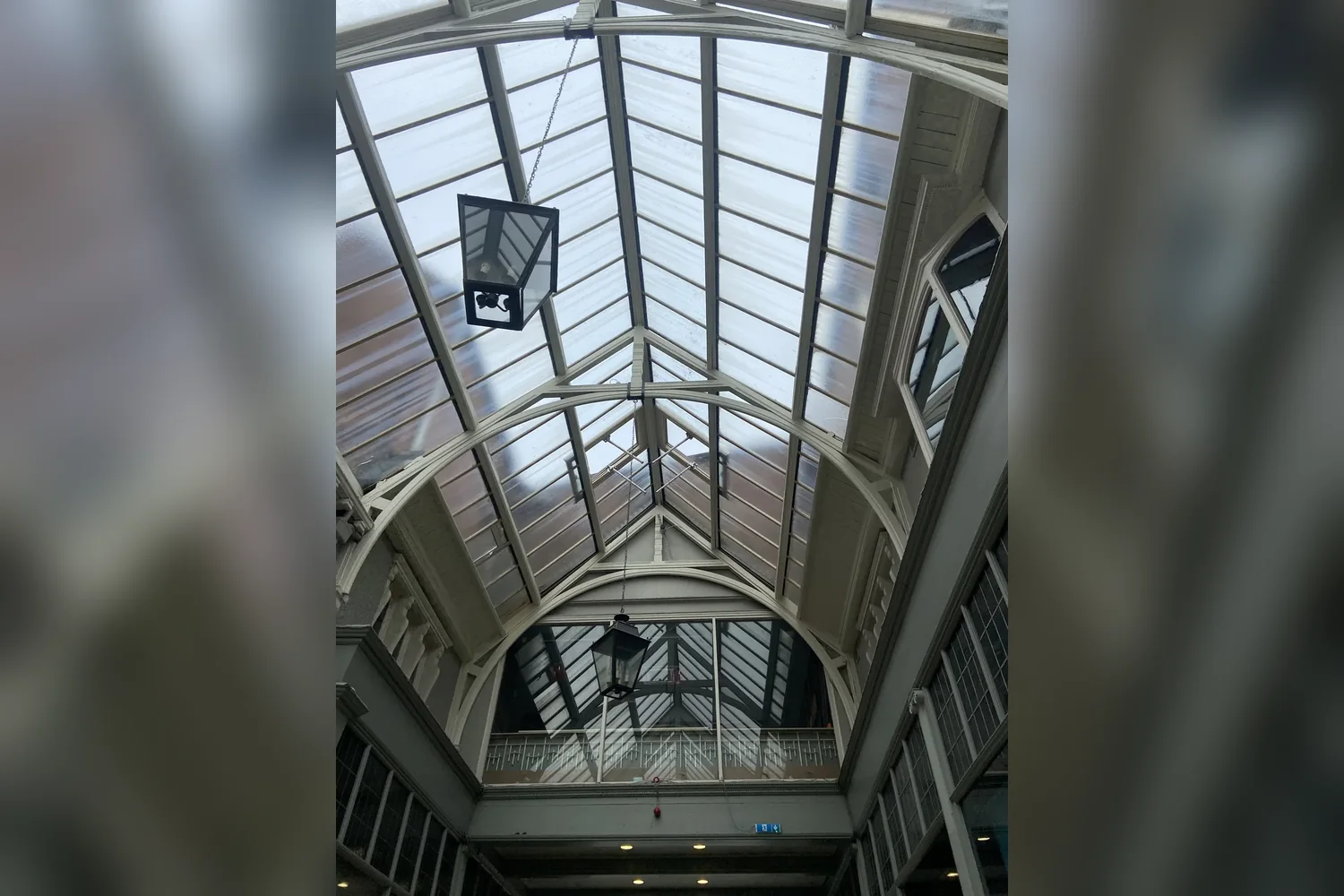
Full electrical shop-fit packages for retail, food service, and commercial leisure units.
Learn more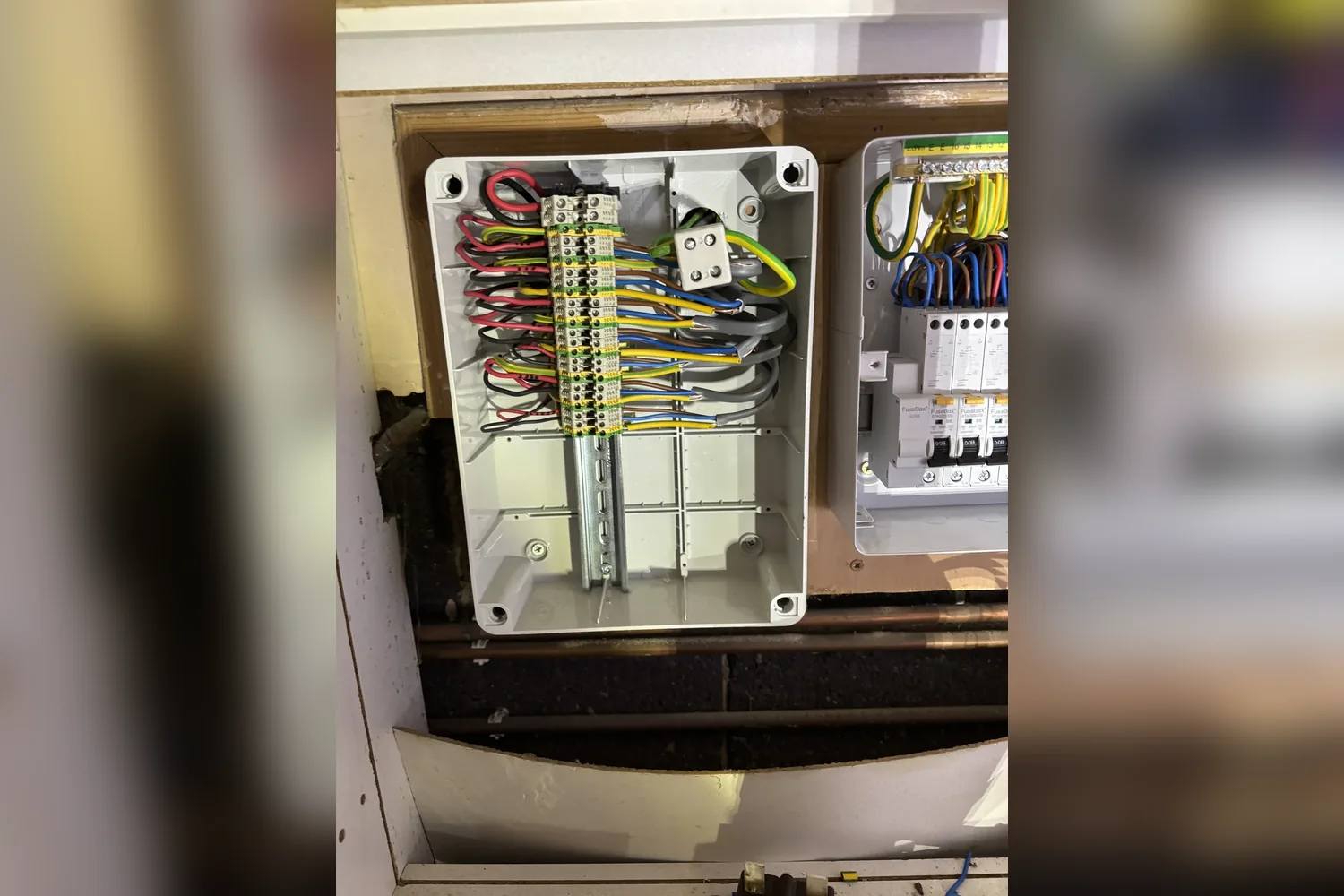
Consumer unit and commercial fuseboard upgrades to current BS 7671 standards.
Learn moreThree-person Halifax team. Commercial and industrial across Yorkshire and the North.
 ★★★★★ Google rated
 ★★★★★ Facebook rated
Contact information
How can we help you?
Wrightsons Electrical Ltd is a Halifax-based commercial and industrial electrical contractor, owner-led by Jacob Wrightson. Three qualified electricians on the team, twenty-five years of combined experience across the trade. We specialise in smoke ventilation, control panel design and install, axial fan installations, and the unsexy compliance work that keeps commercial buildings safe and signed-off.
We're NAPIT registered, which means every job is signed off against current BS 7671 + the relevant BS EN standards, and the certification lands on the customer's side without us having to chase it. Building control inspectors, consultants, and main contractors don't have to re-check our work. They've seen the documentation pack before.
Quality matters more to us than turnover. We don't run two crews in two buildings on the same day with one foreman shouting between them. Every job runs with the electrician who quoted it on site for as long as it takes, with proper materials and proper time, and a clean handover at the end. Most of our work comes through recommendation, which tells us we're doing something right.
After install we stay available. Servicing, modifications, EICR re-tests, an extra circuit for a new piece of kit, the same number rings, the same engineer turns up. We build long-running relationships with property managers, fit-out contractors, and building owners across Halifax, Leeds, Bradford, Manchester, and the wider North. That's why most clients call us back.

Yes. We install, replace, and repair axial and centrifugal fans across commercial and industrial sites, factories, warehouses, kitchens, and plant rooms. That covers new fan installs, motor swaps, bearing replacements, impeller balancing, and getting a failed extraction line running again.
In most cases yes. We diagnose the fault on the first visit, whether it is a seized motor, worn bearings, a failed capacitor, or a control issue, and we carry common parts to fix it the same day where we can. If a part needs ordering we tell you the lead time up front.
Yes. Fitting a variable frequency drive lets the fan run at the speed the space actually needs, which cuts energy use and noise and extends motor life. We size the drive to the motor and commission it properly.
We do. Regular checks on bearings, belts, mountings, and current draw catch problems before they shut a line down. We can set up a maintenance schedule that suits your site and keep the records for your compliance file.
Yes, with the right access and safe systems of work in place. A lot of extract and axial fans live on roofs, in ceiling voids, or in plant rooms, and we come prepared for that.
An inverter, or variable frequency drive, controls the speed of an AC motor instead of running it flat out all the time. On fans, pumps, conveyors, and HVAC plant that means lower energy bills, softer starts, less mechanical wear, and quieter running. If a motor only ever runs at full speed, a VFD usually pays for itself.
Yes. We install and integrate VFDs across motors, fans, pumps, and HVAC systems, sizing the drive to the motor and the duty, wiring it into the existing controls, and commissioning it so it does what the process needs.
We do. An inverter is only as good as its setup. We program the parameters for your motor and application, set the ramp and protection settings, and test it under load before we leave site.
On variable-load equipment, usually yes, and often significantly. Running a fan or pump at 80 percent speed can use far less power than full speed with a damper or valve throttling it. We give you an honest view of whether your kit is a good candidate before you spend.
Yes. We replace failed or obsolete drives, match the replacement to the motor and duty, transfer or reprogram the parameters, and recommission so the plant runs exactly as it did before.
Yes. We add circuits, swap in new contactors and breakers, upgrade PLCs and relays, retrofit safety devices, and re-engineer panels for new operational requirements, all without ripping out a panel that is otherwise sound.
Often it can be modified. If the enclosure, busbars, and main switchgear are in good order, we can extend or re-engineer the internals for far less than a full rebuild. We assess it and tell you honestly which route makes sense.
We plan modifications around your operation. Some work can be done on isolated sections while the rest stays live; other jobs need a planned shutdown. We agree the safest approach and the timing with you before we start.
Always. After any change we update the schematics, relabel the panel, and hand over revised drawings so the next person who opens it knows exactly what is in there. It is part of doing the job properly.
Yes. We retrofit safety relays, emergency stop circuits, modern protective devices, and updated controls to bring an older panel up to current standards and your current process needs.
Yes. We take care of the whole electrical package for shop fits, food service units, and commercial leisure spaces: power, lighting, distribution, data containment, and final connections, from first fix through to handover.
We are used to it. We coordinate with the shopfitter and the other trades, hit the first-fix and second-fix dates, and keep the electrical works moving so we do not hold up the opening.
Yes. We design the lighting scheme and power layout around your fit-out drawings and how the space will actually be used, then install and commission it. Good lighting and enough well-placed sockets make a unit far easier to trade from.
We do. Every shop fit leaves with the electrical installation certificate and test results you need for building control, your landlord, and your insurer. As a NAPIT registered contractor our certification is accepted without re-inspection.
Yes. Shopping centres and high-street units often need works done outside trading hours or within tight access windows. We plan around that so the fit-out gets done with minimum disruption.
Our home patch is Halifax, Brighouse, Huddersfield, Bradford, Wakefield, Leeds, and Manchester. Larger commercial projects we cover anywhere reasonable in the North, including the rest of West Yorkshire, South Yorkshire, and Greater Manchester. If you're not sure whether your site is in range, call 07925 606508 and we'll tell you straight.
Yes. We're NAPIT registered, which covers our commercial and domestic electrical work under BS 7671 (18th Edition). NAPIT certification means our self-cert under building regs is accepted by local building control without re-inspection, and our customers get the proper compliance documentation at the end of every job.
We were established in October 2024 as Wrightsons Electrical Ltd, but the team behind it has twenty-five years of combined experience in commercial and industrial electrical contracting. The company is new; the people running it are not. Companies House registration number is 16046713.
Yes. We provide free, no-obligation written quotes for every job. For most commercial work the quote is fixed against your spec, so there are no surprise charges when the install lands. For larger projects we'll come on site to survey before quoting. There's no charge for the survey or the quote.
Our standard working hours are Monday to Sunday, 08:00 to 18:00. Most office work is scoped during weekdays, but we'll work weekends and out-of-hours where the install demands it (operating retail spaces, restaurants, plant rooms that can't go offline during their busy periods). Out-of-hours is quoted up front.
Our focus is commercial and industrial. We'll take on a domestic job (rewires, consumer unit upgrades, lighting installs) where it's local to one of our commercial projects or where a commercial client also wants work at home. We don't run a separate domestic call-out service.
Car park ventilation removes the build-up of exhaust fumes during normal use, keeps temperatures inside the structure manageable, and, in a fire, clears smoke from the car park so anyone inside can get out safely. Building Regulations Approved Document B requires it for most under-croft and basement carparks.
Smoke ventilation is BS EN 12101. We work to that standard for AOV (automatic opening vent) systems, mechanical smoke extract, car park ventilation, and stairwell pressurisation. Every install is followed by full commissioning and test certification so building control gets what it needs at sign-off.
Pricing varies because every building is different. Smaller AOV swaps for stair pressurisation start around £3,000. Full new-build car park ventilation systems with fans, ductwork, control panels, and full commissioning can reach £15,000 or more. We always quote fixed against the spec after the survey.
Yes. BS 9999 and the Regulatory Reform (Fire Safety) Order 2005 both require regular servicing of life-safety smoke systems. We offer annual service contracts to building owners and managing agents covering inspection, function testing, control panel checks, and full documentation for the building's fire safety file.
In many cases, yes. If the design and install was documented properly we can run the commissioning programme, certify the system, and take over annual servicing. If the documentation is missing we may need to redo more of the work to confirm it meets BS EN 12101. We'll tell you which scenario you're in after a site visit.
Both. We sub-contract to main contractors and consultants on new-build and major refurbishment projects, and we work directly with building owners and managing agents on retrofit and maintenance work. Either way the customer gets the same documentation pack and the same standard of install.
A typical industrial control panel houses circuit breakers, contactors and relays, PLCs (programmable logic controllers), regulated power supplies, terminal blocks for incoming and outgoing wiring, variable frequency drives where motors are involved, plus the control switches, push-buttons, and indicators the operator interacts with. We pick components to match the plant the panel is driving.
We work across the standard tier-one brands: Siemens, Allen-Bradley, Schneider Electric, ABB, and Omron. Our default recommendation follows whatever the customer's existing maintenance team already supports. We don't lock you into a brand your in-house electrician can't service.
Every panel we build is constructed and tested to BS EN 61439, which is the current standard for low-voltage switchgear and controlgear assemblies. Form-4 segregation is available on request. Safety-critical control logic is built to BS EN ISO 13849 to match the plant's risk category.
Three to six weeks is typical for a small-to-mid-size panel from approved drawings to factory acceptance test (FAT). Larger industrial panels with bespoke PLC programming run longer. We give a delivery date in writing as part of the quote so the rest of the project programme can plan around it.
Often, yes. Adding circuits, retrofitting safety, upgrading a PLC, and re-engineering the wiring for new equipment is sometimes a better option than a full replacement. We'll survey the existing panel and tell you honestly which route is cheaper and which one delivers the better long-term outcome. See our Control Panel Modifications service.
Every panel ships with schematics, layout drawings, parts list, factory acceptance test sheets, and a full O&M manual. After on-site commissioning you also get the site test certificates and a copy of the parameter set-up so your maintenance team can troubleshoot without ringing us.
A lighting upgrade replaces or improves an existing lighting installation to deliver better energy efficiency, brighter or more even illumination, longer-life fittings, and safer operation. For most commercial buildings the upgrade means LED + DALI or 0-10V controls. Energy saving is typically 50%+ versus older fluorescent or HID setups.
Both. Where the consultant or architect has produced a lighting design we install to their specification. Where there's no design yet, we'll do the lux calcs ourselves, pick fittings, and walk the scheme back through the client. We use Relux or DIALux for proper lux-level modelling on larger commercial schemes.
Yes. Emergency lighting installs are tested and certified to BS 5266. We design the escape route scheme, install self-contained or central-battery fittings, run the 1-hour and 3-hour discharge tests, and provide the certification needed for the building's fire safety file. Annual test contracts available too.
DALI (Digital Addressable Lighting Interface) and 0-10V are the two we install most. DALI gives addressable scene control, occupancy sensing, and daylight harvesting. 0-10V is simpler and cheaper where you just need dimming. Both integrate with most BMS systems if you want lighting tied into HVAC and access control.
Pricing depends on the fittings and the scope. Single-fitting replacements start around £250. Full LED retrofits of medium-size workshops with new emergency lighting and full controls reach £2,500 and beyond. We quote fixed against the design, including disposal of the old fittings.
Typical payback for a commercial LED retrofit is 12 to 24 months in energy savings alone. With grant funding or capital allowances the payback shortens. We'll produce a simple energy-saving estimate against your current lighting kWh and let you see the numbers before deciding. No upsell.
Upgrade when you see any of these: an old fuse box with rewireable fuses, no RCD protection across the circuits, frequent tripping or unexplained faults, a major renovation that adds significant load, or a recent EICR with a C1 or C2 finding against the board. New units bring you up to BS 7671 18th Edition with per-circuit RCBO protection.
Yes. BS 7671 (Amendment 3 onwards) requires non-combustible enclosures for domestic consumer units mounted within escape routes. Most domestic upgrades we do go in as metal-clad (steel) boards. Plastic boards are still permitted in some commercial settings but we recommend metal across the board for new installs.
A standard domestic single-phase board swap with up to 12 ways is usually a full day's work, start to finish. Larger commercial three-phase boards or significant circuit re-arrangement can run 1-2 days. We schedule the work so the supply is off for the shortest possible time and never overnight.
Pricing typically falls between £650 and £2,000. Domestic single-phase board swaps with up to 12 ways are at the lower end. Larger commercial units with sub-mains, three-phase distribution, or circuit re-arrangement are at the upper end. We quote fixed after surveying the actual board.
Yes. We issue an Electrical Installation Certificate (EIC) for every new consumer unit, covering the new board and all circuits tested. The certificate is what landlords and insurers ask for. Where the install affects existing circuits we re-test those circuits and include them in the cert.
Yes. EICRs assess the condition of an existing electrical installation and flag any C1, C2, C3, or FI issues. We provide commercial EICRs for landlords, businesses, and property managers, including the test results, photographs, and remediation recommendations. EICRs are legally required for rented residential properties on a five-year cycle.